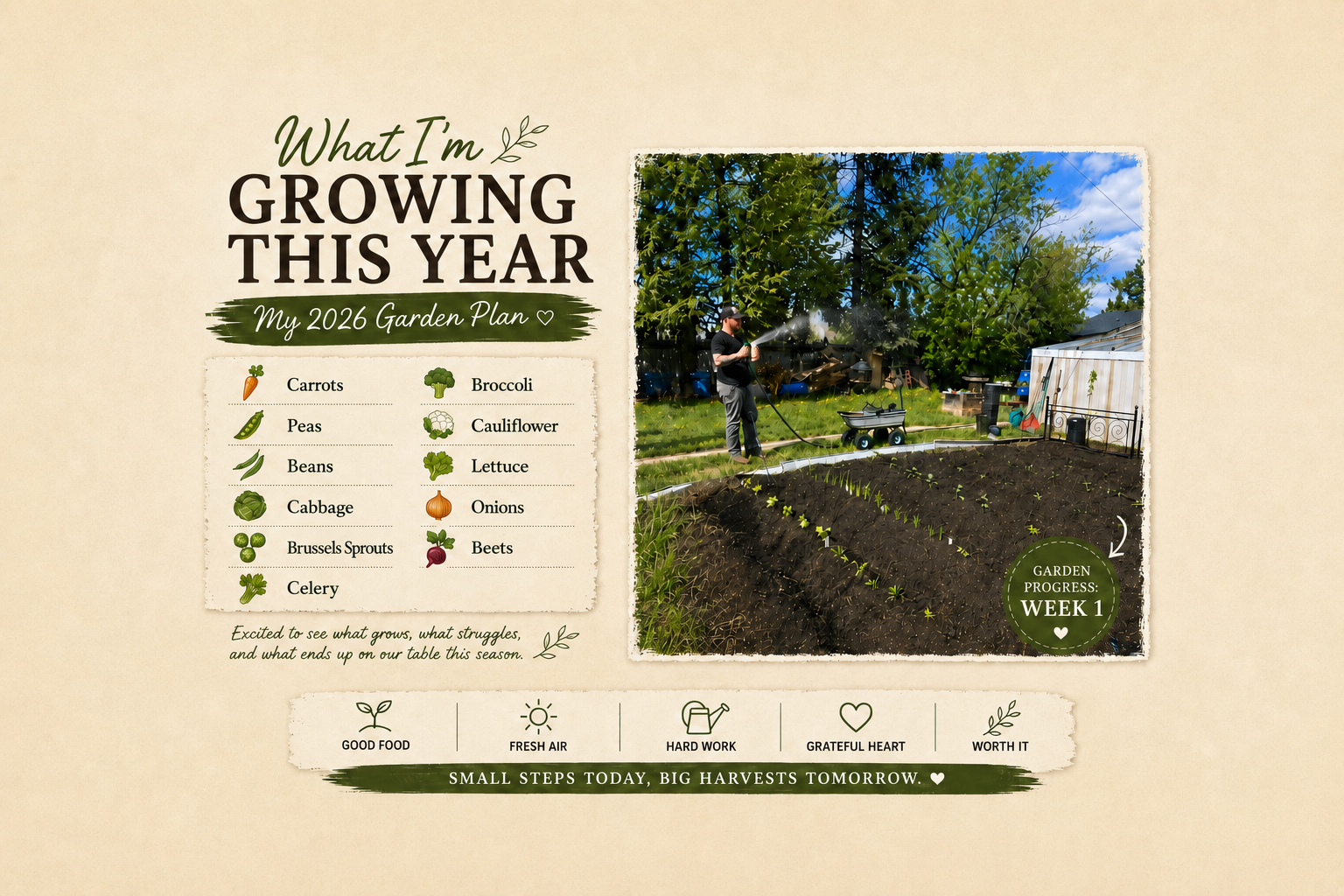
From Weeds to a Working Garden: My Backyard Vegetable Garden Progress (Weeks 1-4)
When I started this garden, it didn’t look like much. Actually, it looked like a lot of weeds.
This is part of my “Creating the Acreage Life in the City” series — sharing the real, sometimes messy process of building a vegetable garden in a backyard, with all the rain delays, struggling seedlings, and small wins along the way.
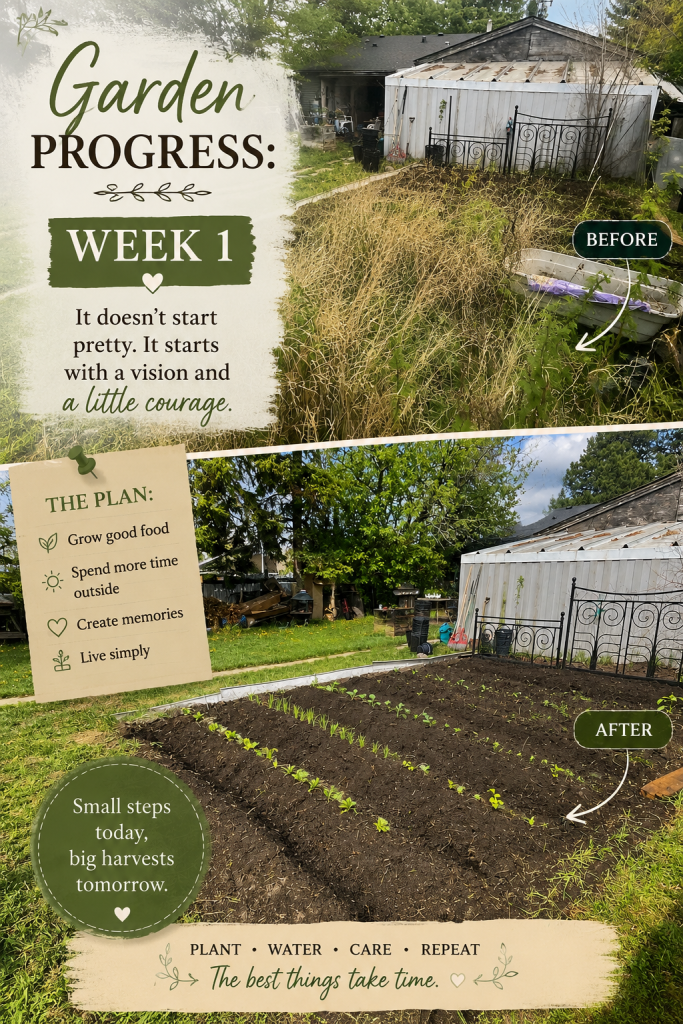
Week 1: Starting From Scratch
The space I had to work with was completely overgrown — tall grass, weeds, and not much else. The first step was renting a tiller and turning all of that into workable soil. After that, it was hours of pulling weeds by hand to clear the bed properly before planting anything.
Once the bed was cleared, I planted most things as small seedlings — cabbage, broccoli, cauliflower, brussels sprouts, lettuce, celery, onions, and beets. A few things went in as seeds directly: peas, beans, carrots, and cucumber.
garden tiller, garden gloves, seed starting trays
Week 2: Rain, Rain, and More Rain
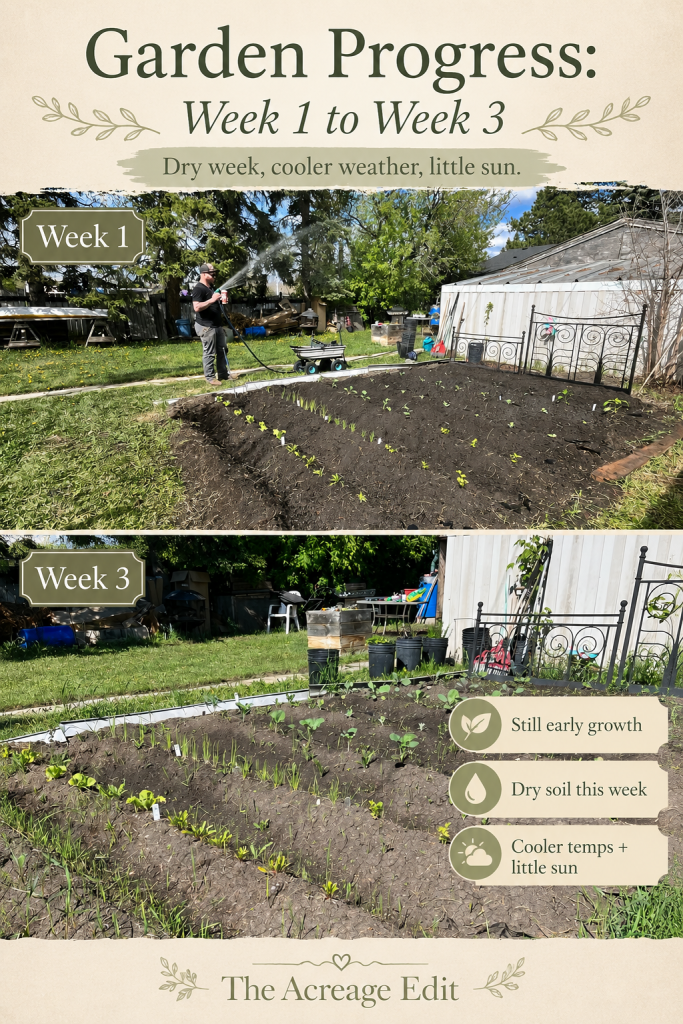
This is the part of gardening nobody really talks about — sometimes the weather just doesn’t cooperate. We had a full week of rain with almost no sunshine. Growth slowed down, but the seedlings held on. A few little plants started showing up, which felt like a small victory after a discouraging week.
Week 3: Mixed Results
By week three, it became clear that not everything was going to grow at the same pace — and that’s completely normal, even though it doesn’t feel that way when you’re staring at an empty patch of soil where beans should be.
About half of my beans didn’t come up at all. Rather than wait and hope, I replanted them — which means that section is now about two weeks behind the rest of the garden. That’s just part of the process. Gardens rarely grow on a perfectly even schedule, and replanting when something doesn’t take is normal, not a failure.
Meanwhile, the cabbages have been the clear overachievers of the bunch — growing noticeably faster than everything else. The plants that are struggling a bit more are the beets and celery, which tend to be slower starters anyway.
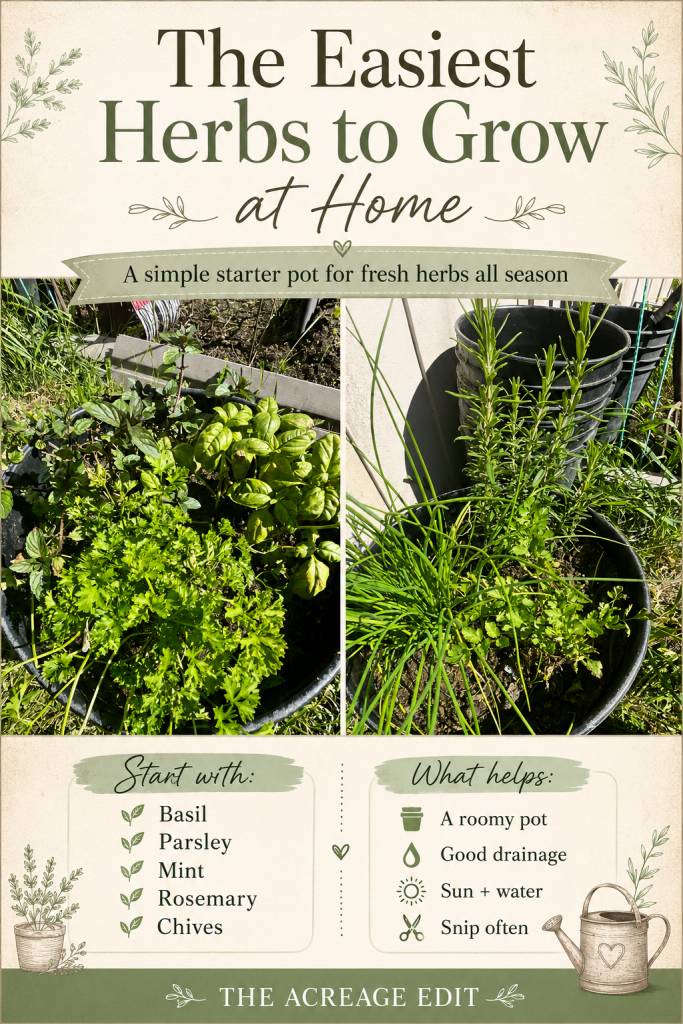
On the side — herbs and flowers
Alongside the vegetable beds, I also have a few pots going with herbs — basil, parsley, mint, rosemary, cilantro, and chives — which are filling in nicely. And because a garden isn’t just about food, I added a small flower bed with marigolds, pansies, and petunias for a bit of color and because, honestly, it makes the whole space feel more like somewhere I want to spend time.
Week 4: Weeding Week
This week’s main job is going through the entire bed and weeding everything thoroughly. Weeds grow just as fast as vegetables — sometimes faster — and keeping on top of them now means less work (and more nutrients for the plants we actually want) later in the season.
What I’ve Learned So Far
A few honest takeaways from these first few weeks:
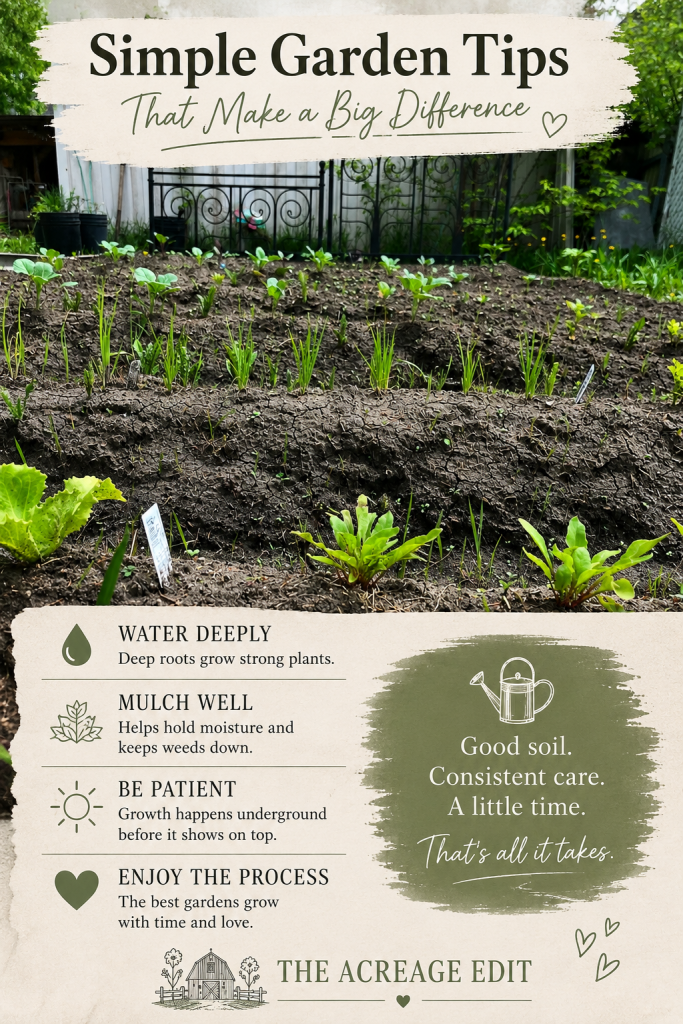
Not everything grows at the same rate, and that’s normal. Some plants — like cabbage — take off quickly, while others like beets and celery take their time.
Weather is out of your control, but consistency isn’t. Even during a rainy, sunless week, the garden kept moving forward because the groundwork was already done.
Replanting isn’t failure — it’s just gardening. If something doesn’t come up, plant it again. A two-week delay in one section isn’t going to ruin the whole garden.
What’s Next
I’ll be sharing weekly updates as the season goes on — the wins, the struggles, and everything in between. If you’re starting your own garden this year, I hope seeing the real, in-progress version of mine — weeds and all — makes your own a little less intimidating.
This post is part of an ongoing series. Follow along for weekly garden updates all season.
My Garden Essentials
- (Tiller) — https://amzn.to/3QGqmuj
- (Garden gloves) — https://amzn.to/4v6zoQb
- (Seed starting trays) — https://amzn.to/4g3urDl
- (Seed packets) — https://amzn.to/4xtP6qg
- (Plant markers) — https://amzn.to/3QGkalZ
As an Amazon Associate I earn from qualifying purchases. This comes at no extra cost to you and helps support The Acreage Edit.